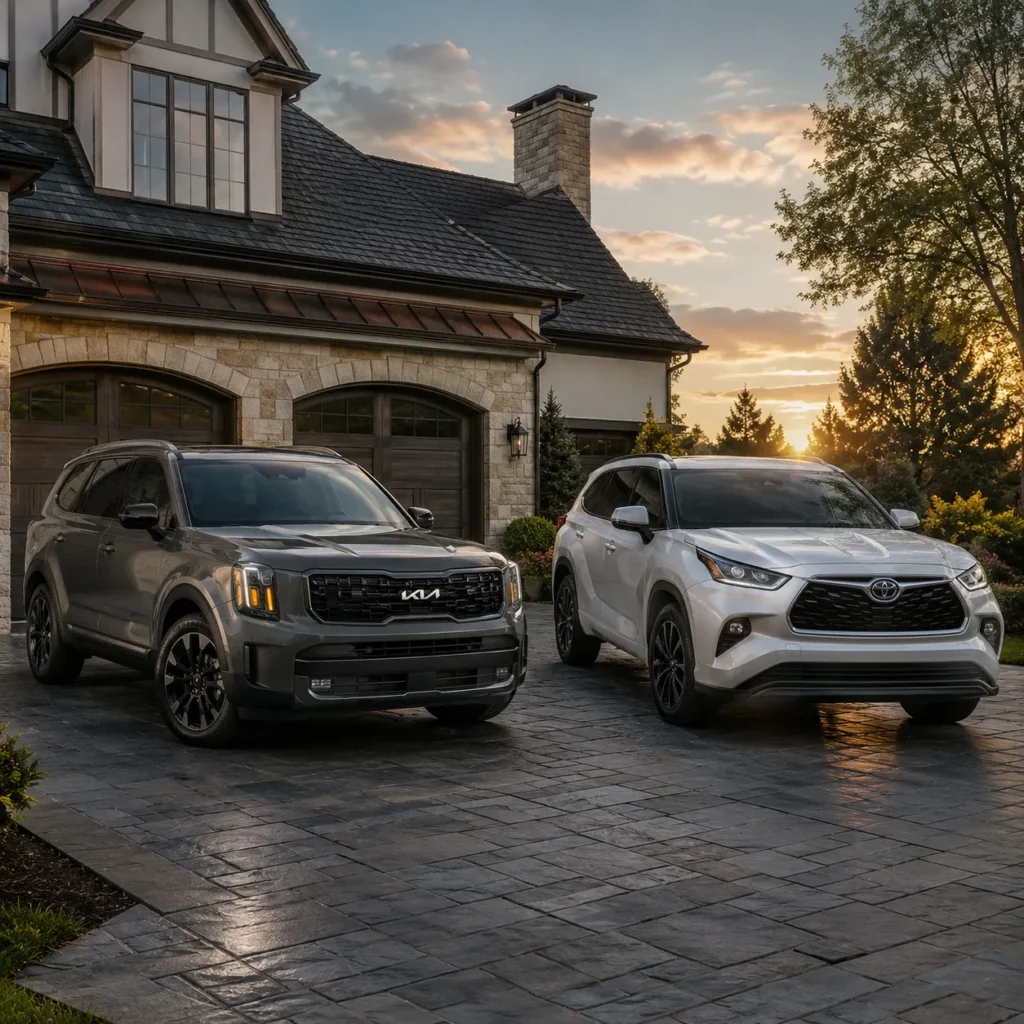
Both are three-row hybrid SUVs. Both seat seven or eight. Both are built for American families who want fuel savings without giving up real space.
And the 2027 Kia Telluride Hybrid just arrived to take on the Toyota Highlander Hybrid directly — for the first time, Kia has a product in this segment with genuine hybrid credentials rather than just a powerful gas engine.
Put them side by side honestly, and the winner isn’t who most people expect.
The Numbers
| 2027 Kia Telluride Hybrid | 2026 Toyota Highlander Hybrid | |
|---|---|---|
| Starting Price | $48,035 | $47,320 |
| Fuel Economy | 35 MPG combined | 36 MPG combined |
| Horsepower | 329 HP | 243 HP |
| 0-60 mph | ~7.5 seconds | ~8.5 seconds |
| Towing | 4,500 lbs | 3,500 lbs |
| Third Row Adults | Comfortable | Tight |
| Cargo (3rd row up) | 21.4 cu ft | 16.0 cu ft |
| Built | Georgia, USA | Princeton, Indiana |
| Warranty | 10 yr/100K | 5 yr/60K basic |
The prices are almost identical — $715 difference at base. The fuel economy is essentially tied — 35 vs 36 MPG. But almost everything else favors the Telluride Hybrid by a significant margin.
also read : https://driveglobalnews.in/us-and-south-korea-just-made-a-trade-deal-korea/
Where the Telluride Hybrid Wins — And It’s Not Close on Several Points
86 more horsepower. 329 HP versus 243 HP in a family SUV is a meaningful difference in everyday driving. Highway merges. Mountain grades. Passing on two-lane roads with a full load of passengers. The Telluride Hybrid doesn’t just feel faster in a straight line — it feels more effortless in the situations where three-row family SUVs actually need power: loaded, uphill, at highway speed.
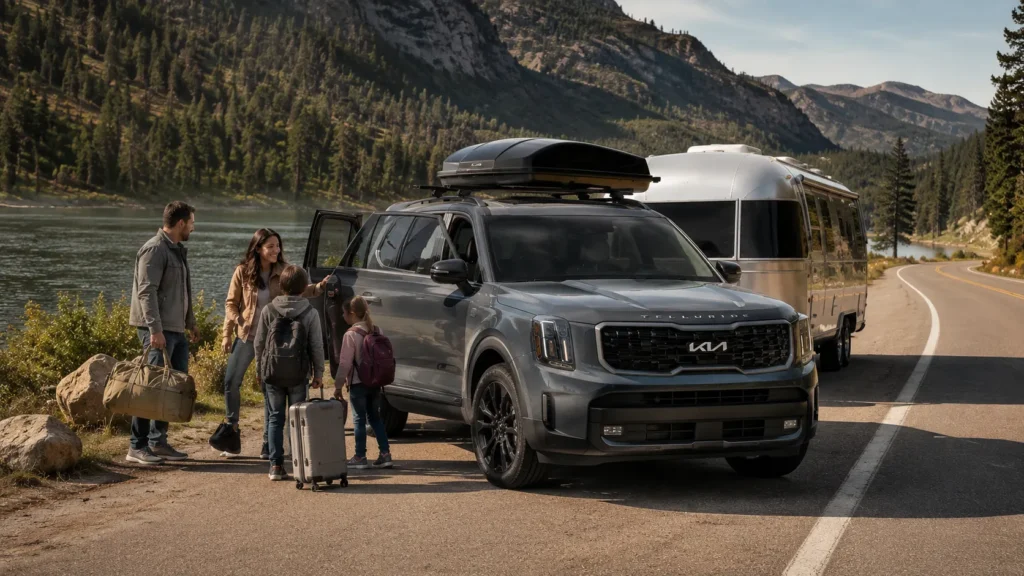
1,000 pounds more towing. 4,500 lbs versus 3,500 lbs. For families who tow a small camper, a boat, or a trailer of any substance — this gap is real. The Highlander Hybrid’s 3,500 lbs is fine for light loads. The Telluride’s 4,500 lbs opens up a meaningfully larger category of what you can actually pull.
More usable third row. The Telluride’s third row is comfortable for adults on normal trips. The Highlander’s third row is honestly best suited for children or adults on short journeys. This single difference determines which vehicle is genuinely a seven-passenger family vehicle versus which one is a five-passenger vehicle with emergency seating.
More cargo space with third row up. 21.4 cubic feet versus 16.0 cubic feet. That 5.4 cubic foot difference is meaningful when you’re loading groceries, sports equipment, or luggage with all rows occupied.
Longer warranty. Kia’s 10-year/100,000-mile powertrain warranty is the best coverage offered by any mainstream automaker. Toyota’s 5-year/60,000-mile basic coverage is industry standard — and Kia’s coverage is twice as long. For buyers keeping the car 8-10 years, the warranty difference represents real financial risk reduction.
Modern interior. The 2027 Telluride’s complete redesign brought a genuinely premium cabin — ergo-motion massaging seats, panoramic sunroof, Bang & Olufsen audio, head-up display on upper trims. The Highlander Hybrid’s interior is refined and well-made but not freshly redesigned. Kia’s cabin feels newer because it is newer.
Where the Highlander Hybrid Wins — And This Is Genuinely Important
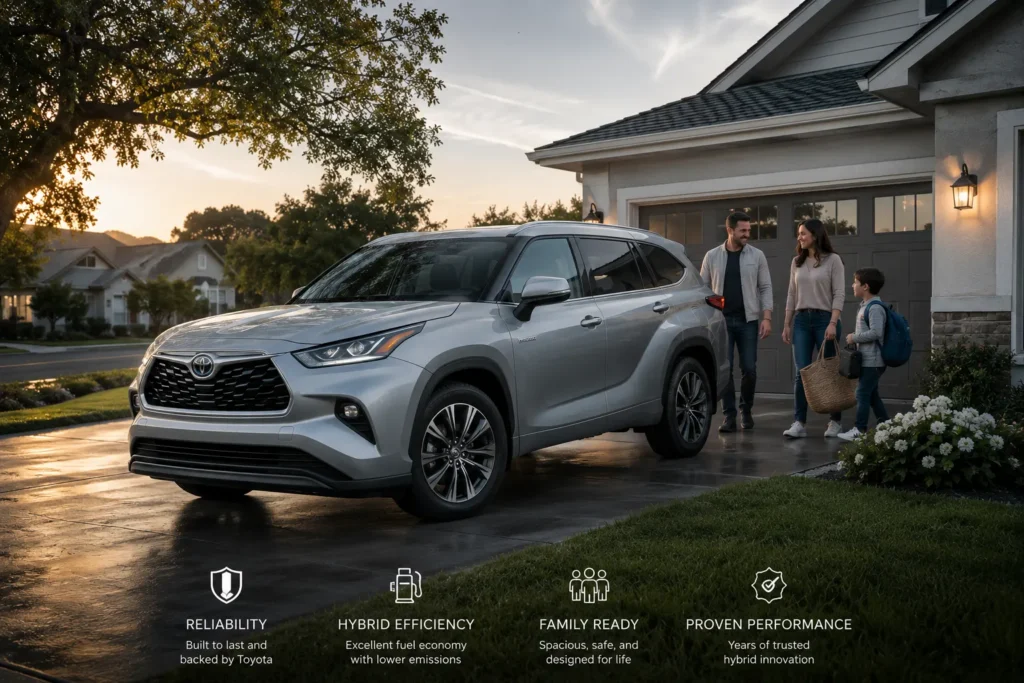
Proven hybrid system. The Toyota Highlander Hybrid has been in production since 2005. Across 20 years and hundreds of thousands of units, the hybrid system’s long-term reliability has been proven comprehensively. The Telluride Hybrid is brand new. It’s Kia’s first hybrid in this size class. The powertrain is derived from proven technology — but the Highlander’s track record in three-row hybrid form is simply longer.
1 MPG better fuel economy. 36 versus 35 MPG is essentially rounding error — $88 difference annually at current gas prices and average mileage. But if fuel economy is your primary purchase motivation, the Highlander wins on its best-in-class metric by a hair.
Toyota reliability reputation. J.D. Power’s 2026 dependability study places Toyota significantly above the industry average. Kia is improving consistently — its scores are genuinely better than five years ago. But Toyota’s reliability reputation is earned over decades and isn’t easily matched by a brand still building its long-term track record.
Resale value. Toyota Highlander Hybrids hold their value exceptionally well — 70%+ after three years in favorable market conditions. Kia’s resale is improving but doesn’t yet match Toyota’s. If you plan to trade in after 3-4 years, the Highlander recovers more money.
also read : https://driveglobalnews.in/cheapest-car-insurance-companies-in-2026/
The Verdict — And It’s More Nuanced Than Headlines Suggest
Here’s the honest answer: the Telluride Hybrid is the better vehicle for most families making a purchase decision based on what they get for their money today.
More power. More towing. More usable third row. More cargo space. Longer warranty. A fresher interior. At essentially the same price.
The Highlander Hybrid is the better vehicle for families making a decision based on long-term ownership certainty. Twenty years of proven hybrid reliability data. Toyota’s exceptional service network. Superior resale value. One more MPG.
Buy the Telluride Hybrid if: Your family actually uses the third row, you occasionally tow, the warranty matters for a 10-year ownership plan, and you want the most genuinely impressive cabin at this price point.
Buy the Highlander Hybrid if: You plan to sell in 3-4 years and want maximum resale value, you prioritize the most proven hybrid track record available, or you have a Toyota dealer relationship that makes service easier.
Neither choi ce is wrong. But the buyer who chooses the Highlander purely out of Toyota loyalty — without accounting for the Telluride’s objective advantages — is leaving real value on the table.
The Telluride Hybrid came to compete. Based on what it offers, it’s succeeding.
See 5-year total ownership costs for both with our Car Ownership Cost Calculator.