
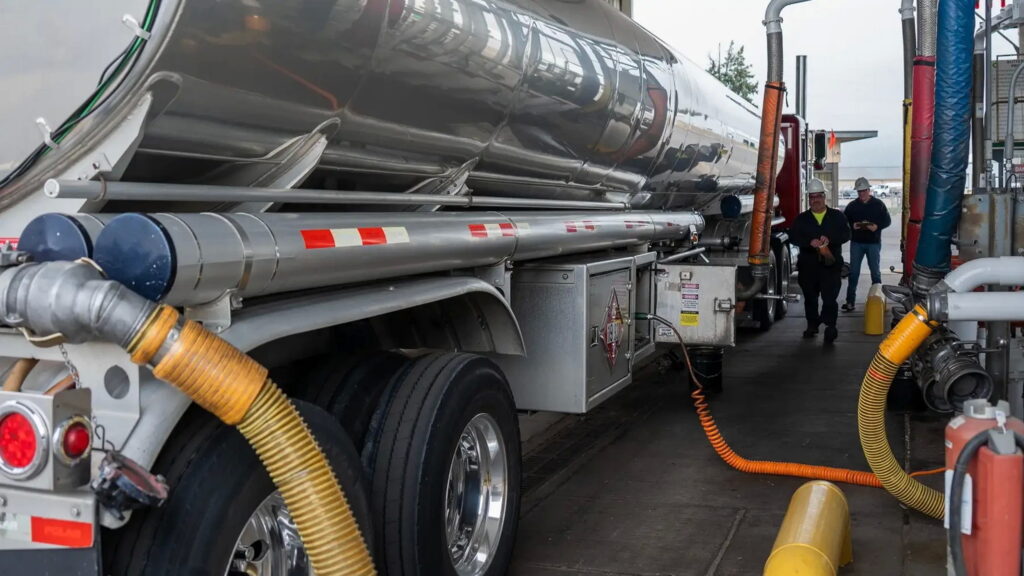
Diesel Prices: The national average price for a gallon of on-highway diesel just crossed $6.00, blowing past the old 2008 record of $5.81 and adding roughly two dollars to every gallon since this time last year. That’s not a statistic you admire on a screen. That’s a number that hits a long-haul owner-operator in the lower back every single time the pump clicks off, and it hits them roughly 150 times a month.
Diesel Prices: What Six Dollars a Gallon Actually Feels Like
| Fuel Type | Price per Gallon | Cost per Mile* |
|---|---|---|
| Diesel | $6.00 | $0.20 |
| Regular Gasoline | $4.60 | $0.18 |
| Premium Gasoline | $5.10 | $0.20 |
| Electricity (equiv.) | $1.50 | $0.05 |
*Assumes 30 MPG for gasoline, 6 MPG for diesel, 3 mi/kWh for electric.
Do the body math. A Class 8 truck drinking fuel at six miles per gallon burns a gallon every six miles, and at $6.00 that’s 15 cents per mile of diesel alone — before tires, before brakes, before the driver’s own coffee. Run 120,000 miles a year and you’ve handed the fuel island about $18,000 more than you did twelve months ago. For a small fleet running five trucks, that’s a mortgage payment evaporating every month.
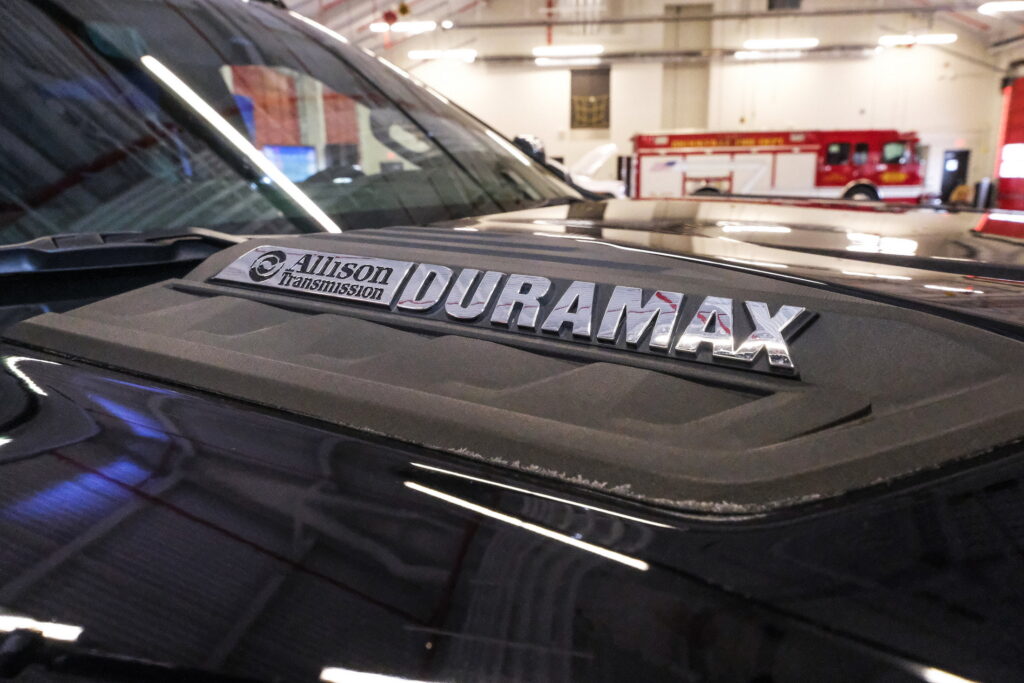
So, does this actually change what you should buy? For a personal-use diesel pickup owner, the pain is milder but real: a truck averaging 18 mpg and 1,200 miles a month now costs about $400 a month in fuel versus $270 last spring. That $130 swing is the difference between a comfortable payment and a tight one. The diesel engine’s old economic argument — better mileage, better torque, better resale — was always a long-game spreadsheet. At six dollars, the spreadsheet has flipped sides.
The Short Answer, and Why It Might Be Wrong for You
The short answer: if you don’t tow heavy for a living, do not buy a diesel right now. The longer answer — and why that short answer might be wrong for you specifically — starts with a hard look at what you actually haul. A contractor pulling a 14,000-pound enclosed trailer five days a week can’t substitute a gas half-ton without losing capability, and no fuel price changes physics. That person pays the six dollars and grimaces.
But the weekend warrior towing a 6,000-pound boat eight times a summer is subsidizing a $10,000 engine option with a fuel bill that a gas V8 handles fine at 12 mpg loaded. The diesel’s torque delivery — that deep shove in the chest from a standing start — is genuinely addictive. It’s also the most expensive way to feel it. The calculation isn’t about whether diesel is better. It’s about whether your specific job description requires it.
The Bills Nobody Mentions at the Sales Desk
Two ownership realities surface after purchase, not before. First, diesel maintenance runs hotter than gas: the fuel filters, the DEF consumption, the emissions hardware that demands expensive attention around 100,000 miles. A clogged DPF service can run $2,500 to $4,000, and it tends to arrive right when you’ve stopped budgeting for it. Second, resale on diesel trucks softens first when fuel spikes, because the used market is full of buyers doing exactly the math you’re doing now.
Neither of these are dealbreakers. They’re just the things no showroom mentions until after you sign.
Diesel Versus the Alternatives
Two competitors matter here: gasoline and electricity. The decision point that determines 80% of purchase decisions is cost per mile in your real duty cycle, not sticker price. Diesel runs about 20 cents per mile in a heavy truck; gasoline in a light-duty truck runs about 18 cents; grid electricity runs closer to 5 cents. On a 1,500-mile month, gasoline saves a diesel pickup owner roughly $30 to $40 — modest, but it compounds.
On a payment basis, choosing a gas half-ton over a comparable diesel can drop your monthly outlay by $80 to $120 once you strip the engine premium from the financed amount. That’s real money against a fuel bill that’s already up $130 a month. Choose gasoline if you tow under 8,000 pounds and drive daily. Choose diesel only if your trailer weight and mileage make the torque non-negotiable.
Which Version Makes Sense, and For Whom
Base spec — the gas V6 or base V8 work truck — suits the buyer who hauls occasionally and commutes daily. Skip it if you’re pulling 12,000 pounds through the Rockies twice a month; you’ll hate the downshifts. Mid spec, the gas V8 with a tow package, is the buy-this-one recommendation: it covers 85% of real towing needs without the diesel premium or the emissions maintenance. Top spec, the heavy-duty diesel, only pencils out above roughly 20,000 towing miles a year.
Most people spending the extra $10,000 on the diesel option will never tow enough to earn it back. At current prices, that premium plus the fuel delta is a five-figure decision that a gas truck solves for less.
The Two Buyers in the Room
Persona one: Dale, 47, outside Houston, runs a hotshot flatbed hauling oilfield equipment 2,500 miles a week. Diesel is his livelihood, the torque is mandatory, and he passes fuel surcharges to his broker. This price hurts, but the truck stays. Persona two: Marcus, 34, suburban Denver, commutes 22 miles each way and tows a camper four weekends a year. For him, a diesel is a $10,000 option feeding a $400 monthly fuel habit to do a job a gas V8 does at 80% of the cost.
The car is the same. The life is different.
Here’s the twist worth watching: record diesel prices may do more for electric truck adoption than any regulation ever could. When a fleet operator’s fuel line hits 15 cents a mile and electricity sits near 5, the spreadsheet finally screams loud enough to be heard over the engine.
Diesel Prices: Frequently Asked Questions
Q: Why are diesel prices hitting record highs?
Diesel prices are surging due to tight global supplies, reduced refining capacity, and strong demand. The national average hit $6.00 per gallon, breaking the previous record of $5.81 set in 2008. Year-over-year, prices are up about $2.00 per gallon, driven by post-pandemic demand and geopolitical tensions.
Q: How can truckers cope with high diesel prices?
Truckers can mitigate high diesel costs by reducing idling, optimizing routes, and using fuel-efficient driving techniques. Some may pass on fuel surcharges to customers, but small owner-operators often can’t. Considering electric trucks, despite higher upfront costs, could lower long-term fuel expenses significantly.
Q: Should you buy a diesel vehicle now or wait?
If you need a diesel vehicle for heavy hauling, buying now may be unavoidable, but expect higher operating costs. For personal use, consider gasoline or electric alternatives. Waiting for prices to drop is risky as they may stay elevated through summer. Evaluate total cost of ownership carefully.