Flock Safety: Over 1,500 Flock Safety cameras are now mounted on poles, HOA entrances, and highway on-ramps across the United States, and the company’s own data retention policy keeps your plate on file for up to 30 days. That’s the number the press release buries under the phrase “community safety partnership.” What Flock doesn’t put in the headline is the part that should concern every driver: the private networks built on top of that same hardware, running with no retention limit, no public records law, and no oversight board you can call.
Flock Safety: The Friction: What the Announcement Left Out
| Spec | Details |
|---|---|
| Deployment | Over 1,500 Flock cameras in the US |
| Data Retention | Up to 30 days (public agencies) |
| Private Networks | Indefinite retention, no public oversight |
| Pricing | Subscription-based, not publicly disclosed |
| Regulation | No federal oversight for private networks |
Flock’s public-facing pitch is simple — cameras help police solve crimes, and footage auto-deletes in 30 days. That’s the version repeated in city council meetings and neighborhood newsletters. What the marketing deck skips is that Flock’s platform allows customers to share camera feeds with other agencies and private entities through a feature often called a “network.” Once your plate enters that network, the 30-day clock applies to the originating agency, not necessarily to every downstream recipient.
So, does a 30-day deletion promise actually protect you if three other departments and a private security contractor pulled the same data on day two? Nobody has published a clear answer. There is no federal statute governing how private license plate data gets shared, sold, or stored. The FTC has issued guidance, but guidance is not enforcement, and enforcement is not a retention limit.
Translated Specs: What the Hardware Actually Does
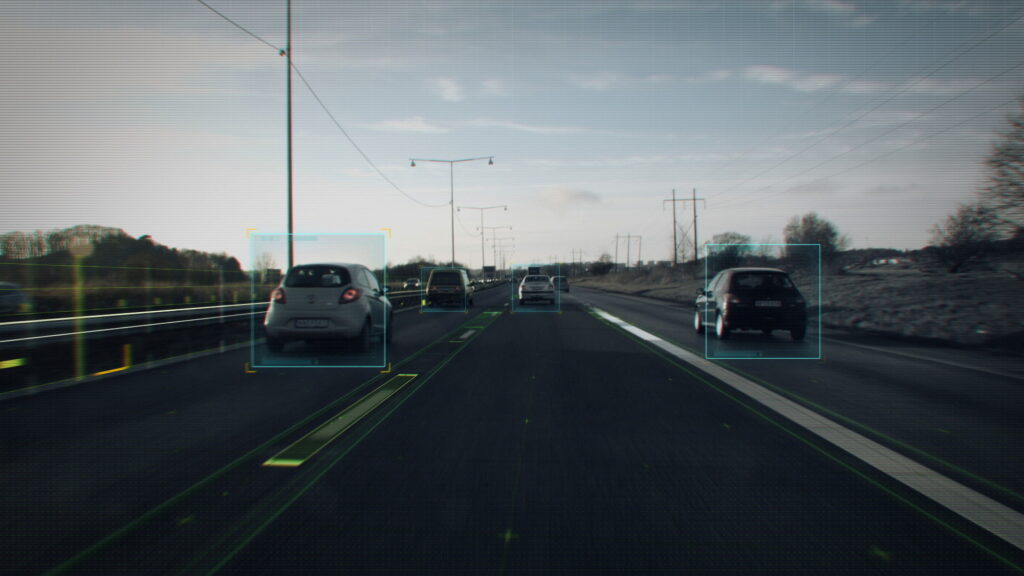
A Flock camera captures a plate, a vehicle make and color, and a timestamp, then runs that plate against hotlists and stored history. In daily driving terms, that means a trip to the grocery store at 6:14 p.m. on a Tuesday becomes a searchable record. If your neighborhood association runs a Flock camera at the entrance, your arrival and departure pattern is now a data set.
The 30-day retention window sounds tight until you realize that’s 30 days per query, per agency, per network. A private network with no deletion policy can hold that same record for years. Think of it as the difference between a bank that shreds statements monthly and a landlord who keeps every receipt indefinitely. One has a policy. The other has a filing cabinet and no rules.
Variant Breakdown: Public Agency vs. Private Network
There is no trim walk here, but there is a fork in the road that matters more than any option package. The first path is a municipal police department running Flock cameras under a city contract, subject to public records requests and, in some states, mandatory retention limits. The second path is a private HOA, a retail chain, or a security contractor running the same hardware with none of those constraints.
The public-agency version is the one you can actually audit. You can file a records request, attend a council meeting, and read the contract. The private version is the one you cannot see, cannot FOIA, and often cannot even confirm exists until a reporter finds the pole. If you’re a privacy-conscious driver, the private network is the variant to walk away from — and you may not get a vote, because you don’t own the pole.
- Public agency deployment: Contract terms are discoverable, retention is often capped, oversight exists on paper.
- Private network deployment: No public contract, no retention cap, no appeals process for a misread plate.
- Hybrid sharing arrangements: The murkiest category — public data flowing into private hands with no clear off-ramp.
Segment Rivalry: Flock vs. Motorola vs. Genetec
Motorola Solutions runs a comparable ALPR business with similar pricing opacity — neither company publishes per-camera subscription rates, which means taxpayers and HOAs are negotiating blind. Genetec, by contrast, has built its reputation on giving customers more control over where data lives and how long it stays. That transparency difference is the whole ballgame when the product is surveillance.
On retention, Flock’s public-agency default sits at 30 days while private deployments can hold data indefinitely. Motorola’s terms vary by contract, which is another way of saying the customer decides — and the customer is often a police department or a mall operator, not you. Genetec’s configurability is the closest thing to a consumer-friendly option, but “configurable” only helps if the operator chooses the strict setting. Most don’t, because storage is cheap and hindsight is valuable.
Real Buyer Profile: Who This Actually Affects
If you commute 40 minutes each way through three suburbs, cross two toll gantries, and park in a lot with its own camera, your plate is being logged by at least four separate systems before you reach your desk. That’s the profile: the ordinary multi-jurisdiction commuter, not the person with something to hide. Add a school pickup, a gym, and a weekend Costco run, and the pattern writes itself.
Families in HOAs with Flock cameras are the most exposed, because the association can share feeds without a public vote. Renters in apartment complexes with private security contracts are next. If you value anonymity on public roads — and most people do once they think about it — this is the group that should be paying attention.
Hidden Costs and Maintenance: The Bill You Don’t See
There’s no sticker price for drivers, but there is a downstream cost. Insurance carriers have shown appetite for telematics and driving-pattern data, and a plate-reader network that documents your daily route is a data source they’d love to license. Year-one maintenance for the camera owner runs into subscription fees and cellular backhaul, but the driver’s exposure is reputational and actuarial, not mechanical.
Depreciation doesn’t apply to a camera, but it applies to your privacy, and that asset only goes one direction. If a misread plate triggers a wrongful stop, the burden of proving the error falls on you, not the network. There is no warranty for that.
Verdict: Buy It If, Skip It If
Buy into a Flock-equipped neighborhood only if the HOA contract specifies retention limits, prohibits third-party data sharing, and is publicly posted. Skip it if the camera is installed by a private contractor with no disclosed policy — that’s the version with no off switch. The real recall here isn’t a hardware defect. It’s the absence of a rulebook, and until Congress writes one, the private networks will keep expanding while the public debate stays fixed on the cameras everyone can already see.
Flock Safety: Frequently Asked Questions
Q: What is Flock Safety and why is it controversial?
Flock Safety is a license plate reader network used by law enforcement and private entities. It’s controversial because it captures and stores vehicle data, raising privacy concerns. Over 1,500 cameras are deployed in the US, with data retention up to 30 days for public agencies.
Q: How long do private license plate networks retain data?
Unlike public agencies with retention limits, private license plate networks can store data indefinitely. There is no federal regulation governing their data sharing or retention, making oversight difficult and posing significant privacy risks.
Q: Should I be worried about Flock Safety cameras?
While Flock cameras have some oversight, private networks operate with even less accountability. If you value anonymity on public roads, you should be concerned. Advocate for transparency and regulation before these networks expand further.