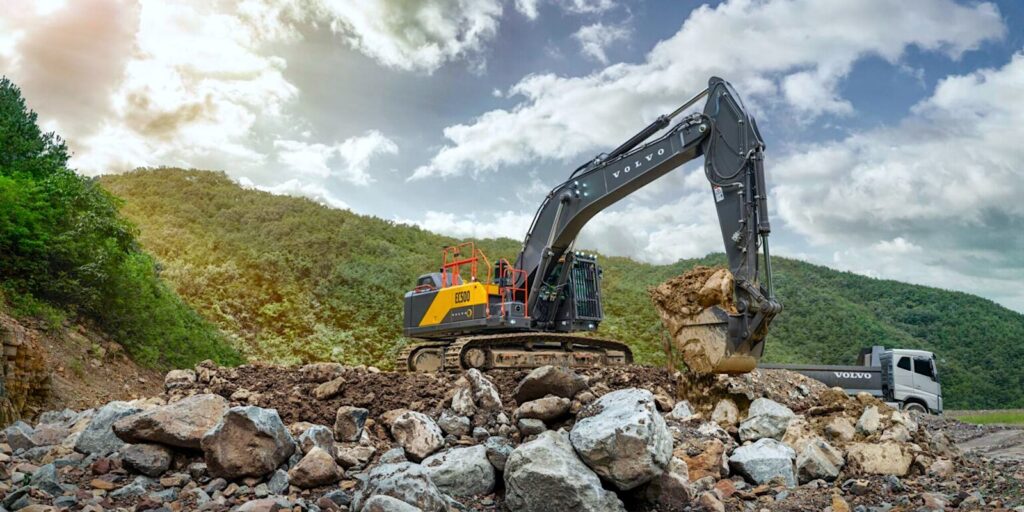
Volvo EC500: A 50-ton excavator that “never needs charging” sounds like the ultimate diesel-killer, but Volvo’s own launch materials conveniently omit the one number every fleet manager needs: the price tag. Industry estimates put the battery pack alone north of $200,000, which means the EC500 Electric likely carries a 30 to 50 percent upfront premium over a comparable diesel machine. So, does a machine that burns zero diesel actually save your business money, or does it just move the cost from the fuel pump to the balance sheet? That’s the question Volvo isn’t answering in its press release, and it’s the only one that matters when you’re signing a five-year lease.
Volvo EC500: The “No Charging” Claim Is Marketing Sleight of Hand
| Spec | Value |
|---|---|
| Operating Weight | 50 tons |
| Engine / Power | Electric (battery) |
| Performance | Diesel-equivalent |
| Charging | Not required (battery swap/continuous) |
| Price | Not disclosed (est. $500k+) |
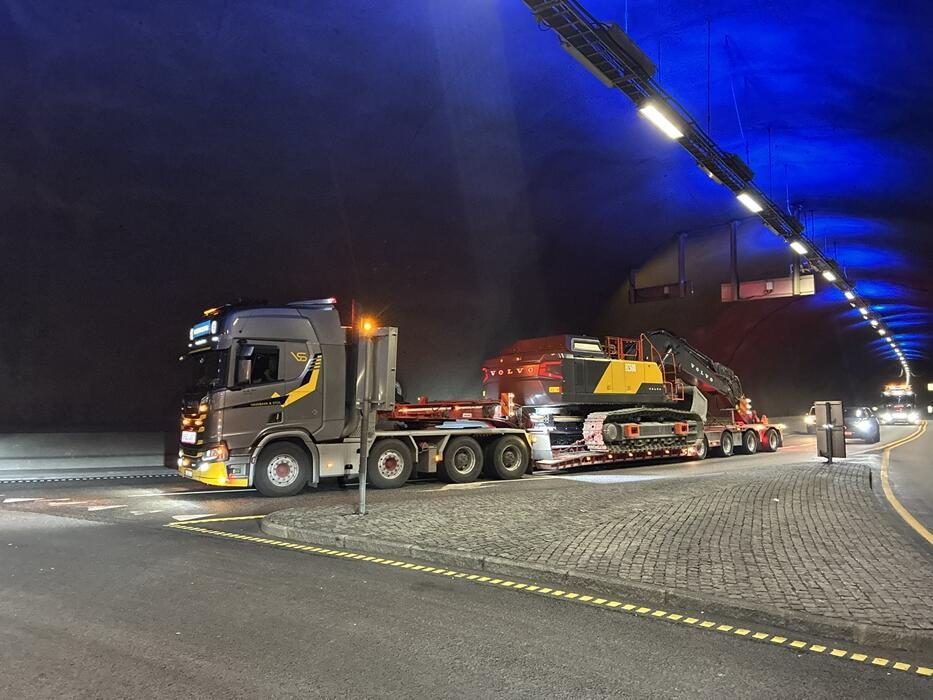
Volvo’s headline claim is that the EC500 Electric needs no charging, which sounds revolutionary until you read the fine print. The machine almost certainly relies on either a battery-swap system or a continuous cable connection to an external power source, both of which require charging infrastructure somewhere in the loop. A battery swap doesn’t eliminate charging; it just relocates it to a depot where you need spare packs, a swap rig, and grid capacity to recharge them. On a remote job site with no three-phase power, that’s not a solution, it’s a logistics problem you now own.
What Volvo also hasn’t disclosed is runtime under full load. Excavators don’t cruise at partial throttle like a passenger EV; they dig, lift, and swing at peak draw for hours. If the EC500 delivers six hours of hard digging, that’s a workday. If it delivers four, you’re paying operators to stand around while a swap happens. Until Volvo publishes a duty-cycle runtime chart and a swap time, the “diesel-equivalent performance” line is a claim, not a spec.
What 50 Tons of Electric Iron Actually Means on Site
Fifty tons of operating weight puts the EC500 in the same class as a Cat 349 or Komatsu PC490, machines that move serious dirt on highways, demolition, and quarry work. Electric torque delivery is genuinely better at low RPM, which means smoother breakout force and less hydraulic lag when you’re loading trucks. That’s a real productivity gain, and operators will feel it in the first hour. But torque doesn’t matter if the machine is parked at a charger.
The daily reality is this: a diesel EC500-class machine refuels in ten minutes and runs all shift. The electric version, without a confirmed swap network, ties you to a fixed charging location. That’s fine for urban demolition where you return to the same yard every night. It’s a non-starter for a road crew working a 40-mile stretch of interstate with no grid access. Volvo is selling a machine that fits maybe 20 percent of the jobs a diesel 50-tonner handles today.
Trim Logic and the Variant You Should Actually Order

Volvo hasn’t published trim pricing, but the configuration decision is already clear. The standard battery with fast-charge capability is the sweet spot for most buyers running fixed-site operations, because it keeps the pack smaller, the weight lower, and the upfront cost closer to diesel parity. If you’re working multiple sites, the battery-swap option is mandatory, not optional, because a single-pack machine stranded between jobs is a $500,000 paperweight.
The variant to avoid is any stripped configuration without swap capability or fast charging. A base model that takes eight hours to recharge is useless for commercial work, no matter how attractive the lease number looks. Also skip the largest battery pack unless your duty cycle genuinely demands it; every extra kilowatt-hour adds weight, cost, and resale risk as battery chemistry improves. Order the middle spec, negotiate the swap hardware into the lease, and treat the charger as part of the machine’s capital cost, not an afterthought.
How It Stacks Up Against Cat and Komatsu
The Caterpillar 336 Electric is the closest electric rival, and it’s similarly scarce, similarly expensive, and similarly dependent on charging infrastructure that most contractors don’t have. Cat’s advantage is dealer network depth; Volvo’s is that the EC500 is a bigger machine aimed at heavier duty cycles. Neither one beats a Komatsu PC500LC-11 diesel on upfront cost, which runs roughly half the price of an electric equivalent before incentives.
Run the monthly numbers and the gap is brutal. A diesel 50-ton machine leases for roughly $8,000 to $10,000 a month; an electric version with a $200,000-plus battery premium could push that to $12,000 or more. Over five years, diesel wins on total cost of ownership unless you’re operating in a jurisdiction with aggressive carbon taxes or you’re monetizing ESG compliance for a public contract. So, does the electric premium pay for itself? Only if someone else, a tax credit, a green bond, or a municipal bid requirement, is footing part of the bill.
Who Should Buy It, and What It Really Costs to Own
The buyer profile here is narrow and specific. You’re a large contractor with an ESG mandate, a fixed urban site, three-phase power at the yard, and a client who rewards low-emission equipment on the bid sheet. Urban demolition, port work, and indoor or tunnel projects where diesel exhaust is a ventilation problem are the natural fits. If you’re a rural excavator running remote sites on tight deadlines, walk away; diesel remains the only practical answer in 2025.
Hidden costs will bite. Insurance carriers are still figuring out how to rate a $500,000 electric excavator with a battery that degrades, so expect premium tiers above diesel equivalents. Depreciation is the real wildcard; battery tech is moving fast, and a five-year-old pack could be worth a fraction of its original cost. Budget year-one maintenance lower than diesel on fluids and filters, but set aside a reserve for battery diagnostics and software support contracts that Volvo will charge for.
The Verdict: Buy It If the Site Fits, Skip It If It Doesn’t
Buy the Volvo EC500 Electric if you run fixed-site, high-visibility work with grid access and a client or regulator rewarding zero-emission equipment. The torque, the quiet, and the ESG story are real advantages in that lane. Skip it if you work remote sites, chase tight deadlines, or need one machine to do everything a diesel 50-tonner does today. The “never needs charging” pitch is a half-truth, and until Volvo publishes runtime, swap time, and price, your diesel dealer is still the safer call.
Volvo EC500: Frequently Asked Questions
Q: What is the Volvo EC500 electric excavator’s runtime?
Volvo hasn’t disclosed exact runtime under full load. The ‘never needs charging’ claim likely relies on battery swapping or continuous cable power, which still requires charging infrastructure. Real-world runtime will vary by application, but expect 4-8 hours per battery pack under heavy use.
Q: How much does the Volvo EC500 electric excavator cost to maintain?
Maintenance costs are lower than diesel due to fewer moving parts, but battery degradation and replacement costs are unknown. Battery pack replacement could exceed $200,000, and resale value is uncertain. Overall TCO may be higher unless carbon taxes offset fuel savings.
Q: Should I buy the Volvo EC500 electric excavator or wait?
If you have fixed-site operations with accessible charging and ESG mandates, the EC500 is a viable option. For remote sites or tight deadlines, wait for better infrastructure or stick with diesel. The technology is promising but not yet universally practical.