

Gas is $4.50 per gallon. Hybrids are selling faster than dealers can stock them. And millions of Americans are making the switch to hybrid vehicles for the first time — without knowing how much their insurance bill is about to change.
Here’s the honest answer: hybrid car insurance in 2026 is slightly more expensive than equivalent gas vehicle insurance — but the gap is smaller than most people expect, and for many popular models, the fuel savings dwarf the insurance premium difference entirely.
The National Average — Hybrids vs Gas Cars
According to CarInsurance.com’s 2026 rate analysis, the average full-coverage annual premium for hybrid vehicles is approximately $2,184 — compared to roughly $2,638 for the national average of all vehicles.
Wait — hybrids are cheaper to insure than the national average?
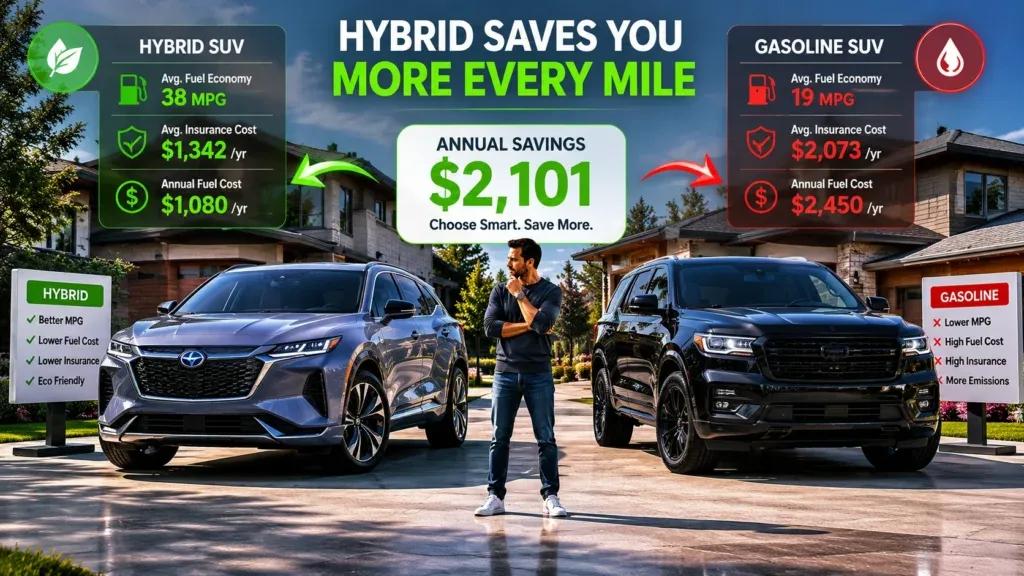
Yes. But that’s partly because the national average includes expensive luxury vehicles, sports cars, and high-performance models that pull the average up. A more useful comparison is hybrid versus the gas version of the same model.
For that comparison: hybrids typically cost 3-8% more to insure than their gas equivalents. The higher purchase price of the hybrid version is the primary driver — comprehensive and collision coverage is partly based on vehicle value, so a more expensive vehicle costs more to insure.
The premium is real but modest. On most popular hybrids, it runs $100-$250 more per year than the gas version of the same model.
also read : https://driveglobalnews.in/ferraris-first-electric-car-uses-technology/
Real Insurance Rates for 2026’s Most Popular Hybrids
These are actual 2026 rate averages for full coverage on specific models with a standard driver profile:
Toyota RAV4 Hybrid — $2,568/year ($214/month) One of the most popular vehicles in America and a surprisingly reasonable insurance rate given its $33,700+ price tag. Toyota’s reputation for safety ratings — consistently top-tier IIHS and NHTSA scores — reduces insurer risk and keeps premiums manageable. The RAV4’s low theft rate relative to its value also helps. This is excellent insurance value for a compact hybrid SUV.
Toyota Camry Hybrid — $1,759/year ($147/month) The cheapest insurance rate among major hybrid sedans. The Camry’s class-leading safety ratings, enormous volume of claims data allowing accurate pricing, low repair costs from widely available parts, and Toyota’s stellar reliability reputation all combine into an insurance rate that is genuinely exceptional. At $1,759 per year, the Camry Hybrid is among the cheapest vehicles to insure of any type at its price point.
Hyundai Tucson Hybrid — $2,100/year ($175/month) Very competitive insurance rate for a compact hybrid SUV starting at $31,900. Hyundai’s improving quality reputation and the Tucson’s strong safety scores keep the premium manageable. Good value for insurance relative to the vehicle’s capabilities.
Kia Sportage Hybrid — $2,190/year ($183/month) Slightly higher than the Tucson despite similar pricing and capabilities — partly because Kia’s brand has historically been associated with slightly higher theft rates in certain markets, which factors into comprehensive premiums.
Honda CR-V Hybrid — $2,112/year ($176/month) Honda’s excellent reliability reputation and the CR-V’s strong safety scores keep insurance competitive. One of the best insurance values in the compact hybrid SUV segment.
Kia Telluride Hybrid — approximately $2,400-$2,600/year The higher purchase price of the Telluride Hybrid pushes insurance above compact hybrid levels. Expected in the $200/month range for full coverage in most markets.
Toyota Highlander Hybrid — approximately $2,700-$2,900/year Three-row SUVs cost more to insure than compact SUVs — higher value and higher repair costs. Still reasonable for a vehicle at its price point.
Why Hybrids Cost Slightly More to Insure — The Real Reasons
The reasons are straightforward and worth understanding.
Higher purchase price. The Toyota RAV4 Hybrid costs roughly $3,000-$4,000 more than the equivalent gas RAV4. Comprehensive and collision coverage is partly based on the vehicle’s value — more expensive vehicle equals slightly higher premium to replace or repair it.
Specialized repair costs. Hybrid battery systems, regenerative braking components, and the electrical architecture connecting them require specialized knowledge to repair. Not every shop can work on them. When a shop can, the labor rates for certified hybrid technicians are typically higher than standard automotive technicians.
Fewer years of claims data on some models. Insurance pricing is actuarial — based on what has actually happened to similar cars. The Toyota Camry Hybrid has decades of claims data allowing precise pricing. A newer hybrid model in its first or second generation has less data, which sometimes means slightly conservative (higher) pricing until sufficient claims history accumulates.
The Math That Makes Hybrid Insurance Worth It
Here’s the complete comparison that most articles skip.
Toyota RAV4 Hybrid vs Toyota RAV4 Gas (same trim):
Price difference: RAV4 Hybrid costs approximately $5,800 more Annual insurance difference: approximately $180 more per year for the hybrid Annual fuel savings: approximately $1,100 per year (40 vs 30 MPG at $4.50, 15K miles)
Net annual financial advantage of the hybrid: $1,100 savings minus $180 extra insurance = $920 per year ahead
The $5,800 purchase premium pays back in approximately 6.3 years on fuel savings alone — and that’s before accounting for the higher resale value of the hybrid at trade-in.
The insurance difference of $180 per year is real. It represents about 16% of the fuel savings. The hybrid is still significantly ahead on total cost of ownership.
also read : https://driveglobalnews.in/car-insurance-rates-are-finally-coming-down-in/
How to Get the Best Insurance Rate on Your Hybrid

Shop at renewal every year. The premium variation between carriers for hybrid vehicles is as significant as for any other vehicle type. Travelers, GEICO, and USAA consistently offer competitive hybrid rates. Get quotes from all three alongside your current insurer.
Highlight safety ratings. When comparing quotes, mention that your vehicle received Top Safety Pick+ from IIHS — which the Camry, RAV4 Hybrid, and Tucson Hybrid all have. Some carriers offer explicit discounts for vehicles with top safety ratings.
Consider telematics. Progressive Snapshot and State Farm Drive Safe & Save apply to hybrid vehicles just as they apply to gas vehicles. A safe driving profile on a hybrid earns the same 10-30% discount available to any enrolled driver.
Bundle with home insurance. The 5-15% multi-policy discount applies regardless of whether your car is hybrid or gas. If your home and auto policies are with different companies — consolidating could reduce your hybrid insurance bill by $100-$300 annually.
The switch to a hybrid is a financially sound decision in 2026’s fuel price environment. The slightly higher insurance premium is a real cost but a manageable one — typically outweighed by fuel savings within the first few months of ownership.
I am blown away by the depth and detail in your posts Keep up the excellent work and thank you for sharing your knowledge with us
Thank you! I really appreciate your support. I’m happy you found the post helpful. More content is on the way!