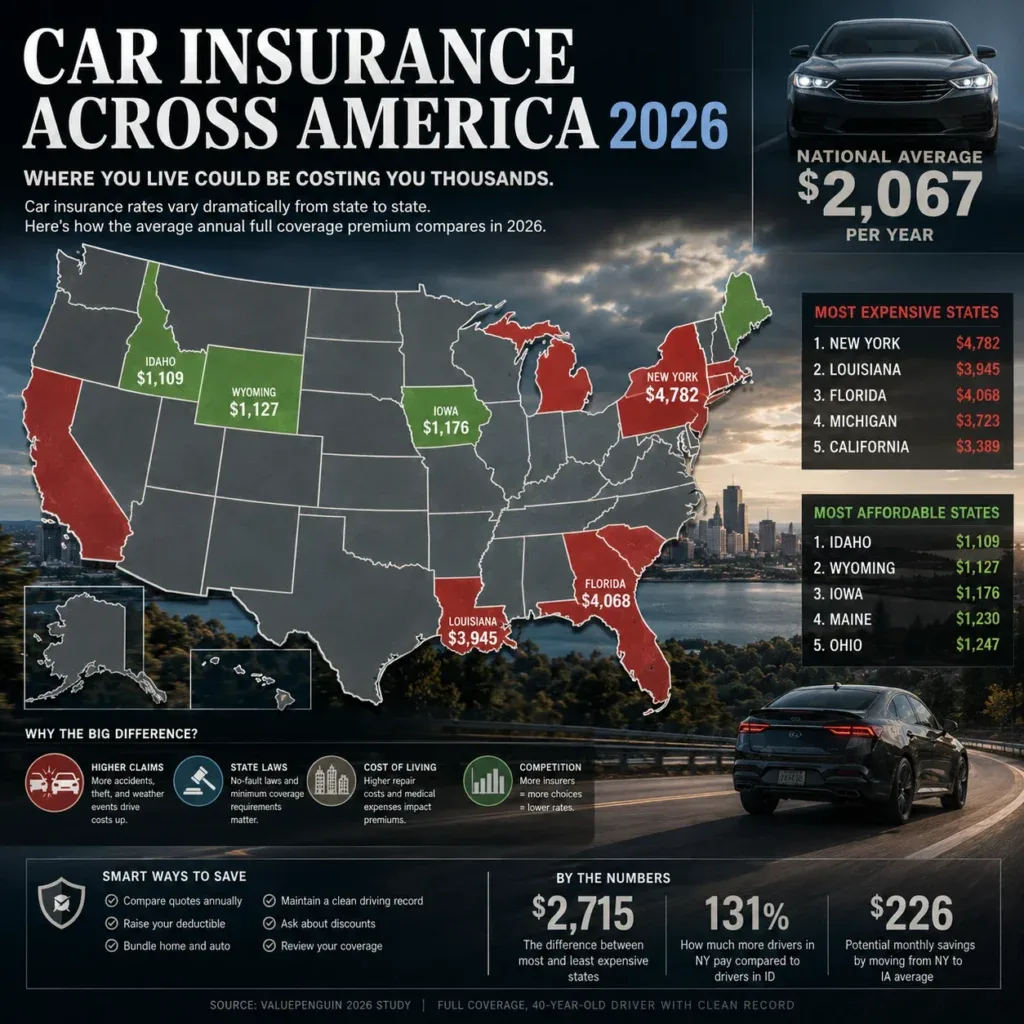

Two years ago, I was paying $225 per month for car insurance.
Clean driving record. No accidents. No tickets. A five-year-old Honda CR-V. I lived in a suburb of Columbus, Ohio. Nothing about my situation screamed “high risk.” And yet — $225 per month. $2,700 per year. Every single month, guaranteed.
I assumed that was just what car insurance cost in 2024. Everyone I knew seemed to be paying somewhere in that range. My insurer sent a renewal notice, I paid it, and I didn’t think about it again until the next one arrived.
Then I actually looked at what I was paying for. And then I made six changes.
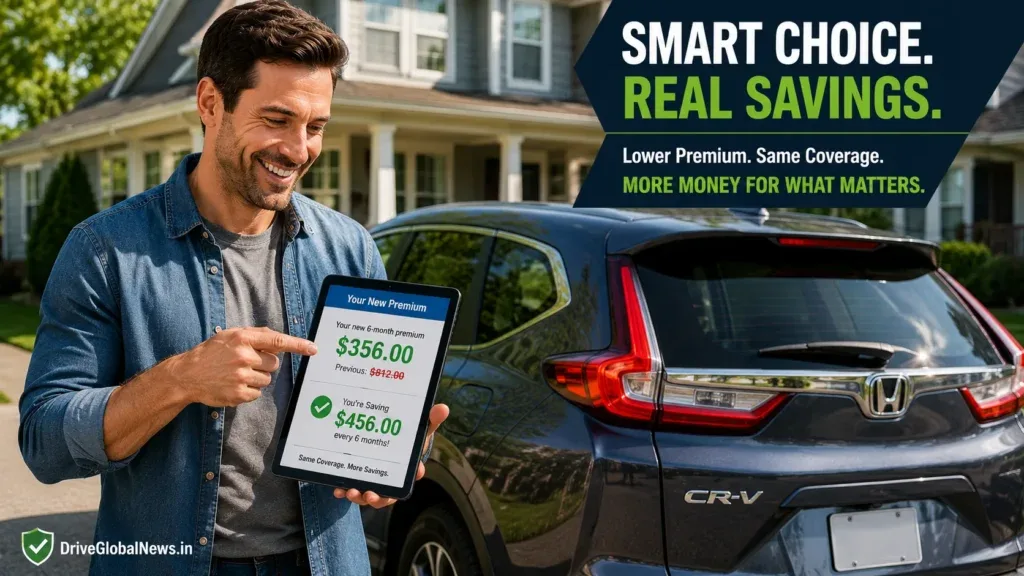
My current monthly premium: $117. Same coverage. Same car. Same ZIP code. Same driving record.
The difference is $1,300 per year that I now spend on other things. Here’s exactly what I did — in the order that saved the most money first.
1. I Actually Shopped My Insurance — For the First Time in Four Years

This is embarrassing to admit but apparently extremely common.
I had been with the same insurer since 2020. I renewed every year without getting a single competing quote. I assumed — incorrectly — that four years of loyalty plus a clean record had earned me a good rate.
It hadn’t. Liberty Mutual, which updated its rate guide on July 20, 2026, puts it plainly: “Many insurers charge for dividing your premium into monthly payments, and loyalty rarely earns the discounts new customers receive.”
The insurance industry operates on a predictable pattern: best rates for new customers, gradually increasing rates for long-term customers who don’t shop. The industry term for this is “price optimization.” The plain English translation is: they charge you more because they’ve calculated you probably won’t leave.
I got quotes from Travelers, GEICO, Progressive, and State Farm. The cheapest was Travelers at $164 per month for identical coverage. My existing insurer was at $225. That single phone call — about 40 minutes of actual work — would have saved me $732 per year. I didn’t even implement the other five changes yet. Just shopping.
Savings from this step: $732 per year.
2. I Raised My Deductible From $200 to $1,000

Here’s the math that my insurance agent never showed me.
My old policy had a $200 deductible. I was paying for the privilege of having insurance cover almost everything — every small claim, every minor scrape. The problem: filing a small claim raises your rate for three to five years. The premium increase from filing a $600 claim typically exceeds the $600 you received in the claim within 18 months.
So I was paying extra for low deductibles on claims I’d never realistically file.
Raising from $200 to $1,000 saved 40% on my collision and comprehensive premium according to Insurance Information Institute data — and Insurify confirmed this as a standard industry outcome. On my specific policy, that translated to $43 per month less.
The condition: you need $1,000 available in an emergency fund to cover the deductible if you actually need it. If you don’t have that — build the emergency fund first, then make the call. But if you do have it, this is $516 per year in savings for a single policy change that takes five minutes.
Savings from this step: $516 per year.
3. I Bundled My Renter’s Insurance With My Auto Policy

I was renting at the time and had renter’s insurance through a different company. Two separate policies. Two separate bills. Zero savings.
Bundling home and auto insurance saves an average of 16% according to industry data — and State Farm specifically averages 22% for bundled customers. I moved my renter’s insurance to Travelers (where I’d already moved my auto). The renter’s policy cost $18 per month. The bundle discount knocked $19 per month off my auto premium.
Net result: I got renter’s insurance essentially for free, and my auto premium still dropped.
Savings from this step: $19 per month net ($228 per year).
4. I Enrolled in a Telematics Program
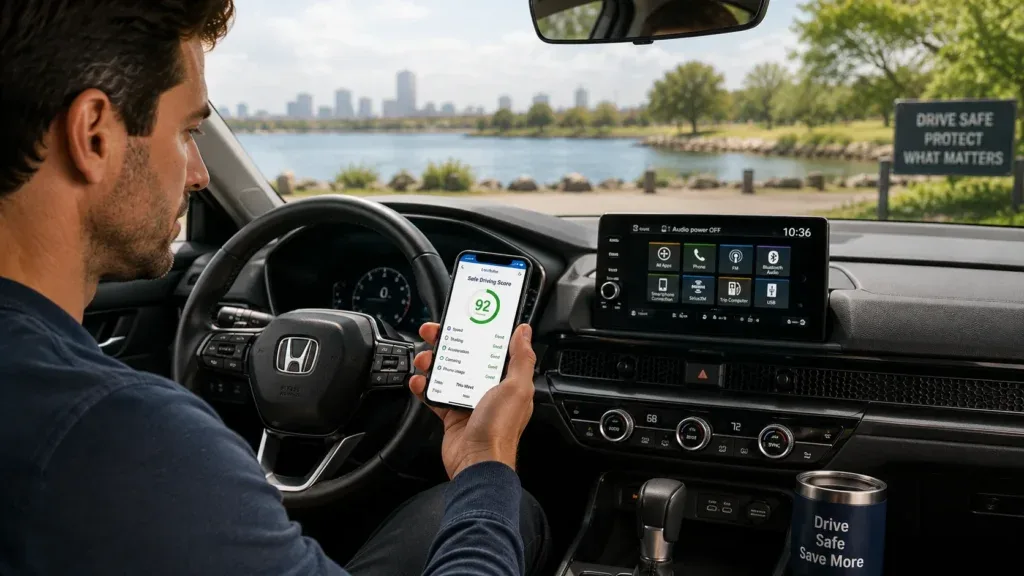
Progressive’s Snapshot. State Farm’s Drive Safe & Save. Liberty Mutual’s RightTrack — updated July 20, 2026 to include more routes to earning discounts.
These programs track your actual driving behavior through a smartphone app. Safe habits — smooth acceleration, limited hard braking, reasonable speeds, minimal late-night driving — earn discounts of up to 30%.
I enrolled in Travelers’ IntelliDrive program. The app monitored my driving for 90 days. I already drove the way I was always going to drive — no aggressive acceleration, limited highway driving, no late nights. My discount: 18% off my final premium.
The one thing to verify before enrolling: confirm the program cannot raise your rate. Travelers’ program, like Progressive Snapshot and State Farm’s program, can only lower your rate or leave it the same. It cannot increase it. Get this in writing before you enroll.
Savings from this step: 18% off remaining premium.
5. I Called and Asked About Discounts I Wasn’t Getting

This took four minutes. Literally four minutes on the phone.
I asked my new Travelers agent: “What discounts am I currently receiving, and what discounts am I eligible for that aren’t applied to my policy?”
The answer revealed two things I was missing: a paperless billing discount ($7/month) and a professional association discount through my employer’s alumni network ($11/month). Neither had been applied automatically. Both existed. Nobody had told me.
This happens constantly. Insurers offer dozens of discounts. They apply them when customers ask. They don’t volunteer them otherwise. The specific question — “what am I eligible for that I’m not getting?” — is the key. Not “do you have any discounts?” That gets a vague answer. The specific phrasing gets a specific list.
Savings from this step: $18 per month ($216 per year).
6. I Switched to Annual Payment Instead of Monthly
Car insurance companies charge installment fees when you pay monthly. Sometimes explicitly. Sometimes embedded in pricing. The Insurance Information Institute confirmed this in their 2026 guide: “Many insurers charge for dividing your premium into monthly payments.”
At Travelers, paying annually instead of monthly saved me $6 per month in effective cost. Small. But it’s $72 per year for doing exactly nothing different — just moving money from my savings account to pay the annual premium upfront.
Savings from this step: $72 per year.
The Total
| Step | Annual Savings |
|---|---|
| Shopping and switching | $732 |
| Raising deductible | $516 |
| Bundling policies | $228 |
| Telematics program | 18% of remaining |
| Forgotten discounts | $216 |
| Annual payment | $72 |
| Total | ~$1,300/year |
$2,700 to $1,400. Same coverage. Same car. Same driver.
The only thing that changed was that I stopped assuming my insurance company had my best interests in mind — and started acting like the person paying the bill.
Which I was. The whole time.